The Threefold Dimensions of Islamic Resistance Explained at a Scholarly Session of the International Research Center of the Islamic Seminaries
- روابط عمومی و رسانه
- Latest News


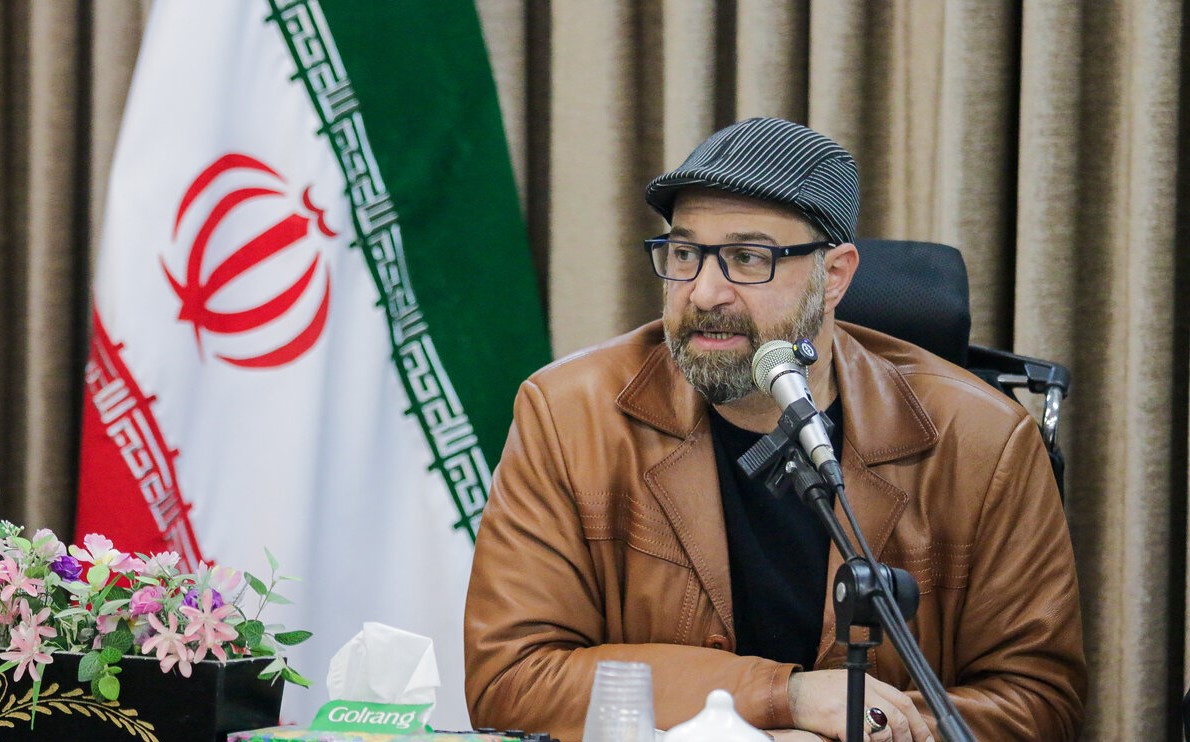
An Argentine professor and researcher, setting out the threefold dimensions of Islamic resistance, stressed that Qur’anic resistance does not mean merely fighting, bearing arms or defending territory. Rather, it is a deep, multidimensional system that must take shape from the Throne to the earth, across the course of history, and on the basis of faith, trust in God (tawakkul), obedience to wilayah, patience, and spiritual and military training.
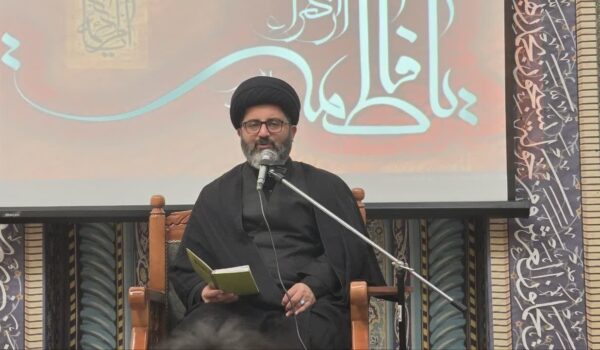
According to the Public Relations and Media Unit of the International Higher Education and Research Complex of the Islamic Seminaries, Suhail Asaad was speaking at the scholarly session “Resistance: A Strategy for Confronting U.S. Colonial Ambitions,” held on Saturday at the initiative of the International Research Center of the Islamic Seminaries at the Masumiyyah Seminary in Qom. Raising the question of whether the Islamic resistance in the arenas of the Muslim world fully corresponds to the Qur’anic and prophetic concept of resistance, he said: “One of my long-standing concerns on the subject of resistance is to know the extent to which what is today known in the arenas of the Muslim world as Islamic resistance corresponds to the divine, Qur’anic and Islamic concept of resistance.”
Stressing the need for care in the use of the term “Islamic,” he added: “The words Islam and Islamic are weighty terms, with a meaning that is deep, vast and wide-ranging. We must therefore always be careful not to call every phenomenon Islamic too readily, and we must measure the degree of its correspondence with the truth of Islam, the Qur’an, the Sunnah and the Islamic system of thought.”
Asaad noted that assessing whether a phenomenon is Islamic is a constant task, and that a person must always examine whether what he regards as Islam and presents under that name in fact possesses this quality. Throughout the history of Islam, he said, many subjects have been introduced as Islamic, only for it later to become clear that they did not correspond to the truth of Islam as had been supposed.
He stated: “There is no doubt that the present resistance in the arenas of the Muslim world is an Islamic resistance. Along this path, however, there are gaps and missing links that must be discussed, so that it becomes clear how this resistance can be raised to a more beautiful and more complete level; for the very concept of being Islamic also has different degrees and ranks.”
Islamic resistance in three dimensions: longitudinal, latitudinal and in-depth
Pointing out that a three-dimensional system of resistance can be obtained from a study of Qur’anic verses, commentaries and hadiths, the Argentine professor and researcher said: “I have called these three dimensions longitudinal resistance, latitudinal resistance and in-depth resistance. This classification has no particular complexity, and the definition of each dimension is very simple.”
Explaining longitudinal resistance, he said it means the confrontation between truth and falsehood from the Throne to the earth. This confrontation begins with God and Satan, continues in the encounter of the prophets with the taghuts, of Islam with unbelief, of the imams of light with the imams of fire, and of the misguided community with the rightly guided community, and ultimately ends with the human being.
Asaad added: “If someone is an unbeliever, yet declares that he wishes to fight on the front of truth and alongside Muslims against the Zionist regime, his mere presence on this front does not mean that his resistance is Islamic; for we do not define the resistance of an unbeliever as Islamic resistance.”
Outward manifestations of resistance, he said, are not by themselves sufficient for regarding it as Islamic: “It is possible for all the outward appearances of a movement to seem Islamic, but if its inward reality is not Islamic, it cannot truly be considered Islamic resistance. In the Qur’anic verses on jihad, concepts such as faith, being fi sabil Allah (in the way of God), sincerity, trust in God and Islamic moral values are always emphasized.”
The researcher stressed that Islamic resistance is a concept that goes beyond war and guerrilla activity: “Islamic resistance has a distinct inward reality, depth and extension. In truth, the principle of the confrontation between truth and falsehood is the confrontation of God with whatever stands against Him, whether it is called taghut, Satan, or any other name.”
He continued: “The principle of Islamic resistance, therefore, is God’s own resistance, and we are present in this field as His representatives. The expression fi sabil Allah does not merely mean having a personal intention; it means that God is the principal champion, the director and the engineer of this war, and that all movements must be defined within the framework of the divine will and command.”
Referring to the difference between the Islamic view of resistance and certain other readings, Asaad said: “In some views, the inward meaning of resistance is set aside and resistance is limited merely to bearing arms, defending the homeland, defending the oppressed and supporting the weak. Yet the defense of the oppressed, the weak and the land is among the manifestations of defending the front of truth and is, in reality, a defense of God.”
He added: “We do not have an independent war waged solely to defend the oppressed. Rather, we stand against the oppressor because God has so commanded, and this movement finds its meaning within the framework of obedience to God. Divine obedience can even change human labels and criteria; the final criterion in Islamic resistance, therefore, is the command of God.”
The Argentine professor emphasized: “If you see that a movement under the name of resistance is moving in a direction in which God has no place, know that the movement is not Islamic. Even if a group claims that it can destroy the Zionist regime and liberate Palestine, but makes the abandonment of faith and the acceptance of atheism a condition for achieving that goal, such a movement cannot be called Islamic resistance.”
Defending the oppressed without monotheistic foundations is not the whole truth of resistance
Referring to the efforts of various currents to separate the outward form of resistance from its divine content, Asaad said: “Throughout history, enemies have sought to push aside the inward meaning of resistance and to preserve only its outward form. From this perspective, one cannot, merely because of a struggle against oppression and colonialism, place figures such as Che Guevara, Fidel Castro and Hugo Chávez within the system of Islamic resistance and in the station of a martyr; for struggle alone, without monotheistic foundations, is not sufficient for this title.”
Citing the view of the martyred Ayatollah Motahhari in his critique of socialism, he added: “In his book on socialism, Motahhari points out that our principal objection to socialism is not that its adherents do not seek justice, the defense of the oppressed or equality; the issue is that the aims of socialism are limited.”
The researcher continued: “Suppose the aim of a current is to establish equality; to feed all people and to meet their economic needs. It is even possible that the United States might give all the poor and the weak in Latin America a house, a salary of two thousand dollars, food and welfare facilities. Should we then say, once these aims have been realized, that America has become a good current? No; because after material and economic aims have been achieved, our jihad for the meaning and the spirit of the human being is only beginning.”
Stressing that Islamic resistance must not be confined within geographical borders and material aims, he said: “We do not fight only for land and territory; we struggle for the sake of God. The meaning of fi sabil Allah is so wide that it must not be limited to Iran, to a single nation or to a single land. Iran has an important place in this system, but the horizon of Islamic resistance is far broader than national borders.”
Referring to Imam Khomeini’s (RA) view on the formation of a party of the world’s oppressed, Asaad said: “The Imam spoke of a party of the oppressed of the world, not merely a party of the Muslim oppressed or of a particular region. The emphasis on the word ‘world’ shows that the horizon of this movement must be very broad and must embrace the whole of humanity.”
He added: “Longitudinal resistance, therefore, means beginning with God and the defense of the front of truth, and seeing the defense of Islam, revelation, the Qur’an, the Ahl al-Bayt (AS), the prophets and the rightly guided communities as a single system. If, along this path, we ignore part of this system and say, for example, that we will not struggle for a particular prophet or a particular revelation, we have in fact fallen into a gap in longitudinal resistance.”
Islamic resistance: a historical continuum from Prophet Noah (AS) to the advent of Imam Mahdi (may God hasten his reappearance)
Explaining the second dimension of resistance, namely latitudinal resistance, the Argentine professor and researcher said: “Latitudinal resistance means the movement of the community (ummah) in the field of resistance and its extension throughout history. We do not have a merely episodic resistance, as if we were to say that because the Islamic Revolution has been victorious, Islamic resistance began from that moment, or that we pursue this path only after Imam Khomeini (RA).”
He continued: “The question of resistance began with Prophet Adam (AS) and has, throughout history, been extended through five principal stations named after the resolute (ulu al-‘azm) prophets, then the pure Imams (AS), Imam Ali (AS), and finally Imam Mahdi (may God hasten his reappearance). All of these stations are parts of a single historical movement, of which our resistance today is also a part.”
Referring to the book The Caravan of Humanity by Shaykh Ikram Barakat, a Lebanese religious scholar, Asaad said: “In this book he presents jihad as a continuous line from the beginning of creation to the Day of Resurrection, and he holds that the prophets whom God Almighty sent were educational stations of this historical movement, so that at each stage humanity might reach a level of readiness and ability for resistance.”
He added: “This theory identifies five principal stations for the historical movement of resistance: Prophet Noah (AS), Prophet Abraham (AS), Prophet Moses (AS), Prophet Jesus (AS) and the Noble Prophet (peace and blessings be upon him and his family).”
Describing the first station, the era of Prophet Noah (AS), the researcher said: “The principal issue in the time of Prophet Noah (AS) was the refusal to accept the prophet as an intermediary between the human being and God. The people had no problem with the principle of God, or even with the angels and revelation; what they would not accept was that a human being like themselves should be introduced by God as a prophet and as an intermediary of guidance.”
Citing Qur’anic verses on Prophet Noah’s call and the people’s objection to the prophets being human, he said: “One of the main axes of Prophet Noah’s resistance was confronting this very idea: why should we follow a human being like ourselves? This was in fact the first stage in the formation of a monotheistic community and in the acceptance of the station of the divine prophet.”
Referring to contemporary examples of this outlook, Asaad added: “Sometimes opposition to wilayat al-faqih is not due to opposition to the principle of the system of wilayah, but because a person does not want someone else to occupy the station of the Guardian Jurist. If that same station were entrusted to him, he might accept it. In reality, the problem of such people is not with the principle of truth, but with the fact that they themselves do not occupy that station.”
On the second historical station of resistance, that of Prophet Abraham (AS), he said: “At this stage the principal issue was the founding and formation of a monotheistic community. Prophet Abraham (AS) sought to form a society on the basis of tawhid and to call people to the acceptance of God and the centrality of monotheism.”
The Argentine professor continued: “At the third station, Prophet Moses (AS) struggled for the establishment of the divine law and ordinances, and the principal issue at this stage was the sovereignty of God’s rulings and laws.”
Referring to the era of Prophet Jesus (AS), he said: “At the fourth station, the Jews harassed Prophet Jesus (AS) to such an extent that God Almighty raised him to heaven. From this perspective, the return of Prophet Jesus (AS) at the end of time is also linked to the realization of divine government and the establishment of Islamic sovereignty; a matter that will be fulfilled in his accompaniment of Imam Mahdi (may God hasten his reappearance).”
Asaad stated: “The second pillar of Islamic resistance, therefore, is to take its historical continuity into account. If we imagine that our resistance is merely a new movement and has no connection with the resistance of Prophet Noah (AS), Prophet Abraham (AS) and the other prophets, we have in fact ignored one of the pillars of Islamic resistance. Islamic resistance is a continuous movement throughout history.”
Jihadi training: the missing link in the system of resistance
Explaining the third dimension of resistance, namely in-depth resistance, he said: “In-depth resistance means the formation of a Qur’anic military and jihadi system. In the set of verses that the Holy Qur’an sets forth on jihad and the confrontation between truth and falsehood, it in fact creates a system of jihadi education and a comprehensive school for training soldiers, mujahids, combatants and forces of resistance.”
Referring to the view of one of the students of the martyred Ayatollah al-Sadr, Shaykh Mahdi Daftari, on the need to reread Qur’anic military training, the researcher said: “One of the students of the martyred al-Sadr relates that, in a gathering of a number of his students, he assigned them subjects such as economics, government, politics and society for research, and asked one of them to pursue the subject of Mahdism.”
He added: “That student worked for about forty years in the field of Mahdism, and his books are regarded as important works in this field; copies of his writings were even sent to the Supreme Leader and to Sayyid Hassan Nasrallah. He also had a recognized scholarly and intellectual standing in the environment of the resistance, and his sons were active in Lebanon’s Hezbollah.”
Referring to one of this researcher’s works on Qur’anic military training, Asaad said: “In his book entitled Rabb al-‘Askari al-Qur’ani al-Mafqud (‘The Missing Qur’anic Military Training’), he seeks to explain the neglected Qur’anic military training and, by examining the verses on jihad, identifies six essential dimensions for the military training of human beings in the Qur’an.”
He continued: “Of these six dimensions, only one is devoted to the material and military aspect, and the other five concern the spiritual, inward and inner aspects of resistance and jihad. This point shows that, contrary to some readings, military power and equipment are not the whole truth of readiness for resistance.”
Six Qur’anic components for training the forces of resistance
Referring to verses of the Holy Qur’an and to a narration from Imam al-Sadiq (AS), the Argentine professor and researcher set out the six components in question in jihadi training, saying: “In the Qur’anic view, five of the principal components of resistance belong to the spiritual and educational dimensions, and only one component concerns equipment and military capability.”
He identified the first component as faith, and said: “Without faith, we have no real army or jihadi force. However strong a person’s muscles may be, and however much he may possess weapons and equipment and enjoy strategy, tactics and foreign policy, the principle and foundation of his power is faith.”
Citing Qur’anic verses on the help given to the believers, Asaad added: “In numerous verses of the Holy Qur’an, victory and divine help (nasr) are linked to faith, including verses that speak of the help given to the believers and of the fulfillment of the divine promise concerning their support. These verses show that faith is the principle and basis of resistance.”
Referring to the verse “Indeed, Allah helps those who help Him” (Inna Allah yansuru man yansuruhu), he noted: “Jihad and resistance are for the help of God’s religion, not for aims separate from it. Of course, matters such as the defense of sanctities, of the land and of the Islamic system also fall under this aim, but the principle must not be forgotten.”
The researcher identified the second component as trust in God (tawakkul), saying: “In the verses of the Qur’an, after the emphasis on faith, the subject of tawakkul is also raised. In fact, the culture of trust in God in struggle and in the field of resistance is one of the essential pillars of victory.”
He regarded the third component as helping the religion of God, and the fourth as obedience to God, the Prophet and those vested with authority (uli al-amr), and said: “In this system, obedience and wilayah have a very important place. The system of wilayat al-faqih, because it defines the path of guidance and the management of society within the framework of wilayah and obedience, possesses an important capacity.”
Referring to the situation of the Muslim world, Asaad added: “In the Muslim world, many societies do not enjoy unity in leadership and a single point of reference, and they face a multiplicity of authorities, schools, views and readings. The existence of an axis of wilayah and leadership, by contrast, makes possible the coherent management and guidance of society.”
He named the fifth component as patience and steadfastness and, citing the Qur’anic verse about a small patient group overcoming a larger one, said: “In Islamic resistance, one person with patience can attain the power of two; one hundred with patience can overcome two hundred; and one thousand with patience can prevail over two thousand. This is an authentic Qur’anic equation, and it shows that patience plays a decisive role in the system of resistance.”
The Argentine professor identified the sixth component as material and military capability and readiness, and stressed: “Only one of the six components emphasized by the Qur’an is devoted to material power, weapons and military equipment, and the other five concern faith, helping the religion of God, trust in God, obedience to wilayah, and patience.”
Deterrent power is not confined to missiles and military equipment
Referring to the concept of deterrence and terror (ru’b) in the verses of the Holy Qur’an, Asaad said: “Some imagine that deterrent power depends only on the number of missiles, shells, military equipment and underground tunnels. Of course, these means are necessary and valuable for confronting the enemy; but in Qur’anic training, even the casting of fear into the hearts of the enemy is, in the end, dependent on the will and power of God.”
He added: “Alongside military capability, the Holy Qur’an emphasizes faith, trust in God, patience, obedience to wilayah and other spiritual components. The true power of resistance, therefore, should not be sought merely in material instruments.”
Stressing the need to attend to the spiritual training of the forces of resistance, the researcher noted: “Sometimes, in the hawza environment, some people imagine that they become ready for a great mission merely by undertaking a particular activity, such as exercise or listening to the Qur’an for long periods; whereas all dimensions of training must be taken into account.”
Recalling an episode from his own years as a seminary student, he said: “About thirty years ago, in 1376 SH (1997–98), I knew a student who exercised for three to four hours every day. At that time I would tell him that we were seminary students and should study, but he believed that he was preparing himself for Imam Mahdi (may God hasten his reappearance).”
Asaad continued: “Likewise, in a tajwid class, a teacher would tell us that if we did not listen to the Qur’an for ten hours a day, we would not become reciters. Such a way of using one’s life, however, needs to be reconsidered. How I wish that, instead of such programs, we had been told to devote part of our time to exercise, part to self-purification, part to a relationship with God, part to increasing insight, and part to a relationship with Imam Mahdi (may God hasten his reappearance).”
He stressed: “The training of a soldier of Imam Mahdi (may God hasten his reappearance) is not achieved by a single activity; all dimensions of a person’s being must be set on the path of readiness.”
The Islamic Republic of Iran: the meeting point of the three dimensions of resistance
Summing up his discussion, the Argentine professor and researcher said: “The Islamic Republic of Iran and the Islamic resistance stand at the meeting point of three lines and three dimensions of resistance: that is, longitudinal, latitudinal and in-depth resistance.”
He added: “The Islamic Republic of Iran is engaged in resistance in the name of Islam, of God, of the Qur’an and of the government of Imam Mahdi (may God hasten his reappearance), not with aims separate from this system. The enemy, too, has been in confrontation with the Islamic Revolution for about the past fifty years, and the principal cause of this confrontation is the Islamic and divine nature of this revolution.”
Referring to the words of Imam Khomeini (RA) on the role of Ashura and Karbala in the preservation of Islam, Asaad said: “The Imam always emphasized that whatever we have is from Ashura and Karbala. Likewise, in the intellectual system of the martyred Imam, the three components of rationality, justice and spirituality are not separate from one another and must be considered together.”